
Intelligence Brief
•10/06/2026
Cultivate Intelligence Brief · Issue 01 · June 2026
Through May and into June, two food stories ran in parallel. Global media stayed locked on the Iran war driving global hunger. The food systems sector moved somewhere else: regenerative agriculture consolidating into national policy and finance, with FAO and African institutions leading the case. The four weeks ahead present an opportunity for leaders and communicators alike to bridge this gap.
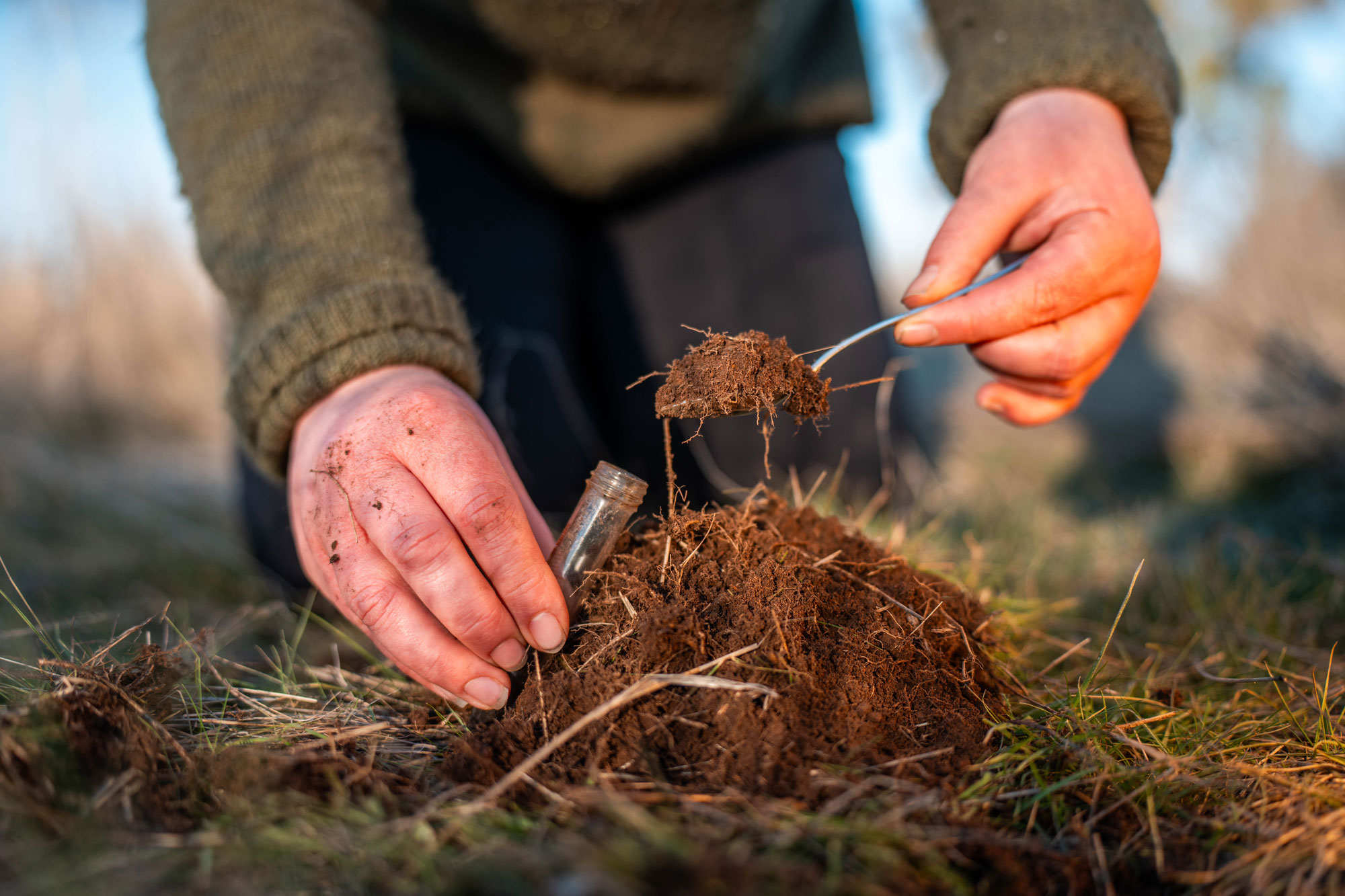
Capturing a soil sample on a farm using regenerative agriculture practices to analyse ecosystem health.
In mainstream global media this month, the food story has been about Iran. The Guardian reported the UN warning that the US-Israel war on Iran is driving historic levels of global hunger, with the world's largest fertiliser firm forecasting food shortages across Africa. Forbes traced how the Iran crisis is reshaping global fertiliser markets. The Guardian warned that Britain was "sleepwalking into a food crisis". The frame is unmistakable: Iran, fertiliser, hunger.
But that is not where the sector is.
In sector and institutional media this month, the conversation has been somewhere else entirely (and much more positive!). In late May, forty leading food and agriculture companies including Carlsberg, Diageo, FrieslandCampina, Mondelēz, ADM and Louis Dreyfus signed a joint declaration to scale regenerative agriculture. On 22 May, Ethiopia's Ministry of Agriculture officially launched its National Regenerative Agriculture Strategy, the third major national strategy of the year in this space, following the National Agroecology Strategy and National Agroforestry Development Strategy launched in March with Landscape Alliance and the Alliance of Bioversity International and CIAT. Through late May, The Nature Conservancy and CII FACE convened India's National Convening on Regenerative Agriculture, with the Andhra Pradesh Community Managed Natural Farming programme drawing wider international recognition through the Agroecology Coalition.
Regenerative agriculture has moved from advocacy into policy and finance. That is what these last four weeks have shown the sector.
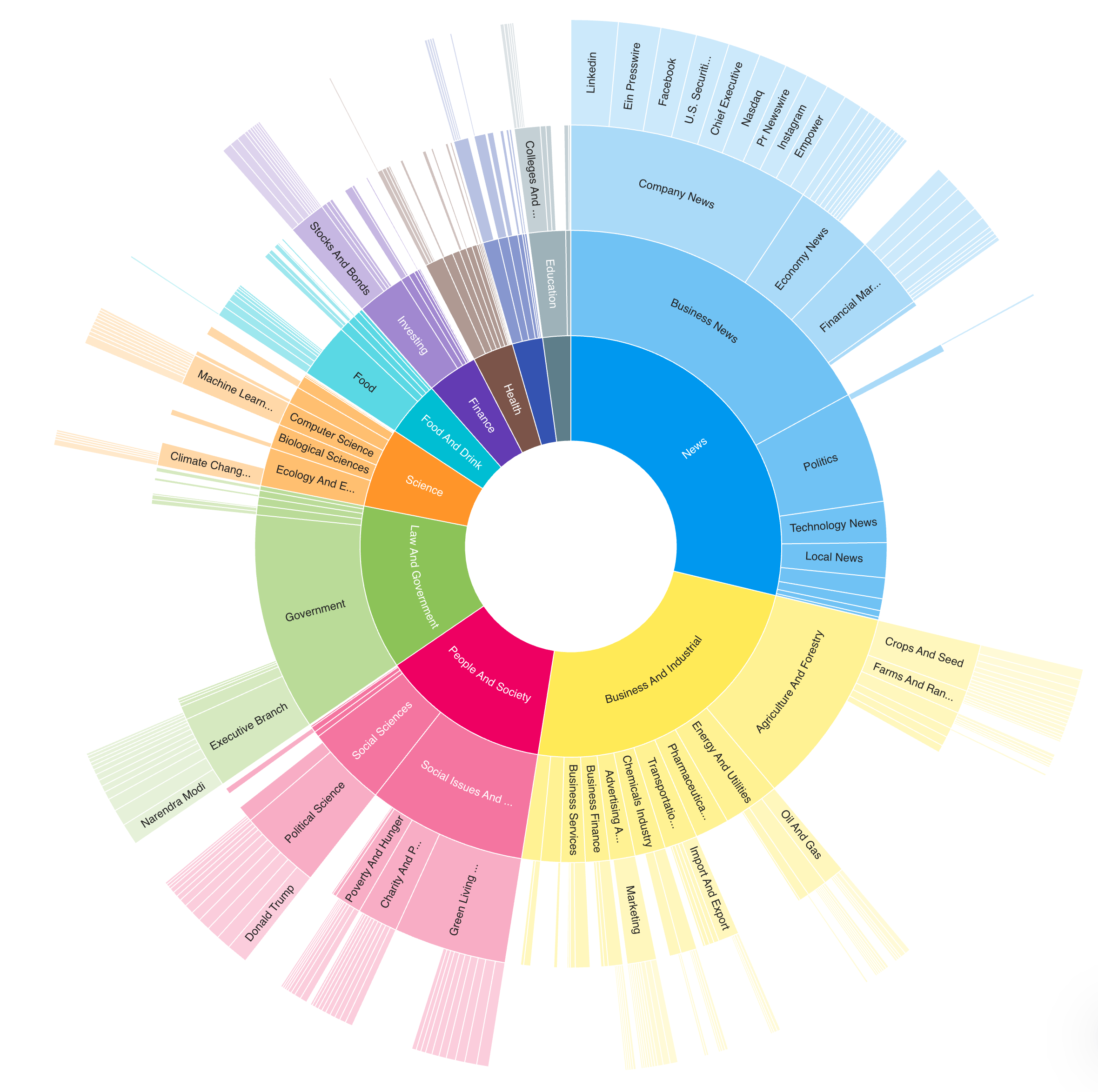
Topics that appeared most frequently over the last six weeks in news media. The chart shows three levels of topics and sub-topics.
The bridge
There is a key piece of cultural infrastructure carrying regenerative agriculture to the public right now. The filmmakers behind Common Ground have returned with a new documentary called Groundswell, with a stated ambition to put a billion acres into regenerative practice. Forbes covered the campaign on 5 June. CBS News ran a feature on the new doc on 3 June.
The film is doing work the sector cannot do on its own: moving regenerative agriculture from trade into general audience attention. For mission-driven communicators, the film is a bridge between where the sector has gone and where the mainstream media remains.
A key takeaway this month
The food story many journalists are writing about, inflation and Iran, is largely absent in sector coverage. The food story the sector is building (regenerative agriculture consolidating, FAO leading, Africa central) is largely absent in mainstream. The two conversations are running in parallel, on different timescales.
That gap is a strategic insight and there is a communications opportunity in the bridge.
Where the institutional case is being made
FAO has been the loudest mission-driven voice in food coverage all month with multiple major announcements: the Agricola Medal to Modi for India's food security work, the Africa's potato potential blog, the GEF-9 replenishment of $3.9 billion to scale sustainable agrifood systems, and FAO MuNe extending into Venice Climate Week. The FAO Food Price Index May update gave editors a hook tying FAO's authority to commodity markets.
CGIAR and its centres ran their own active month. CIMMYT received the 2025 Al-Sumait Prize for African development. ICRISAT expanded climate-resilient chickpea production in Southern Africa. Landscape Alliance hosted a global listening session with Project Dandelion on climate, food systems and women's leadership. CGIAR launched its AI Hub and Malawi launched its CGIAR Policy Innovation Hub. On LinkedIn, the CGIAR Hub for Sustainable Finance shared work on payments for ecosystem services, the financing layer the regenerative movement now needs. ICBA hosted its Millets Harvest Day in the UAE to advance climate-smart agriculture in arid landscapes.
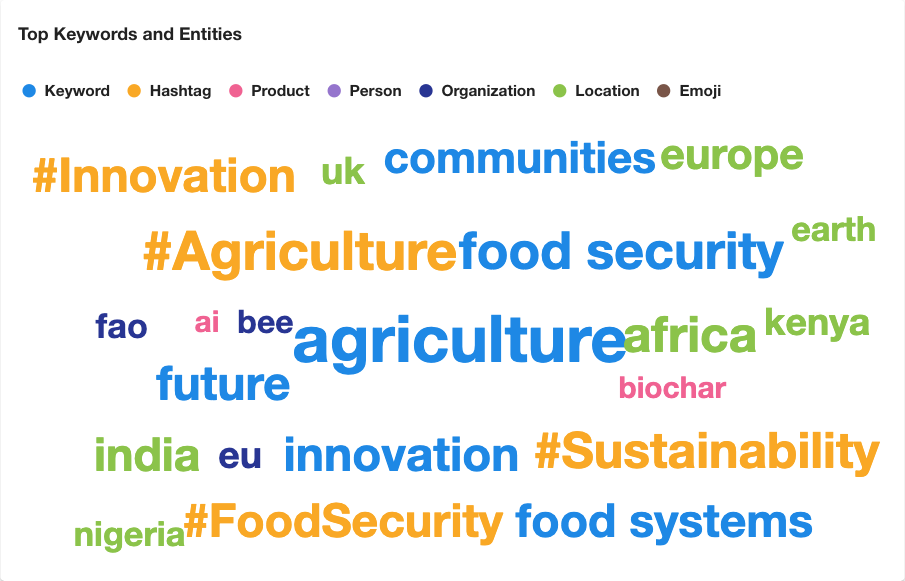
Keywords that appeared most frequently across LinkedIn in the past 6 weeks.
The four-week window
The four weeks ahead are full of sector moments.
The Bonn Climate Change Meetings (SB64) opened 8 June and run through 18 June, with the IPCC Expert Meeting on Agriculture and Food running alongside as input to the Seventh Assessment Report. The Our Ocean Conference begins in Mombasa on 16 June, the first time it is held on African soil, with food security and small-scale fisheries as a central strand. The CFS High-Level Forum on AI, Digitalisation and Data Governance for Food Security takes place at WFP headquarters in Rome on 30 June. The High-Level Political Forum on Sustainable Development convenes in New York from 7 to 15 July, with water and energy under in-depth review and direct food systems implications.
What we'd be doing now
Bridge the gap, do not fight the frame
Most mainstream readers come to food coverage through the Iran-and-hunger frame right now. Communications that start by acknowledging the frame, then pivoting to your evidence, will land better than communications that try to displace it. The sector's regenerative story does not contradict the Iran story. It runs alongside it, on a longer timescale.
Use the Groundswell moment
The film is the cultural infrastructure carrying regenerative agriculture into mainstream audiences. For the next month or two, every conversation about soil, regenerative practice and climate adaptation has a much larger audience than it would otherwise have. If your work touches any of that, this is the window to publish.
Compound through the calendar
Bonn, Mombasa, Rome and New York give four credible hooks across four weeks. Aligning content and op-eds to those moments compounds reach. For climate-food intersection work, the Bonn IPCC Expert Meeting on Agriculture is the strongest single hook. For fisheries and ocean-food work, Mombasa is exceptional and rare. For AI and data work, the Rome High-Level Forum is the natural anchor. For Africa-led food transformation, Mombasa and HLPF both carry weight.
About the Cultivate Intelligence Brief
A monthly strategic review and forecast of one sector: what shifted in the past month, what is coming in the next, and the communication opportunities around it. Each issue reads three layers of the media landscape: mainstream reach, sector prominence and LinkedIn community conversation. It begins with a guided, AI-powered analysis of thousands of global news stories and social media posts. We extract the narratives and sector developments that matter, then identify the opportunities to shift the conversation. This issue took on food systems. Future issues will focus on other sectors as they move.
If a brief like this on your own thematic focus, configured to your geographies and stakeholder landscape would be useful, that is what Cultivate Intelligence can do.
About the authors
The Cultivate Intelligence Brief is written by Samuel Stacey and Holly Holmes, co-founders of Cultivate Communications®. Samuel and Holly are communications specialists working with mission-driven organisations across food systems, climate, environment, health and international development. Through Cultivate, they help research organisations, NGOs and purpose-led institutions turn complex ideas into clear strategy, stronger positioning and communications that reach the audiences that matter.
